
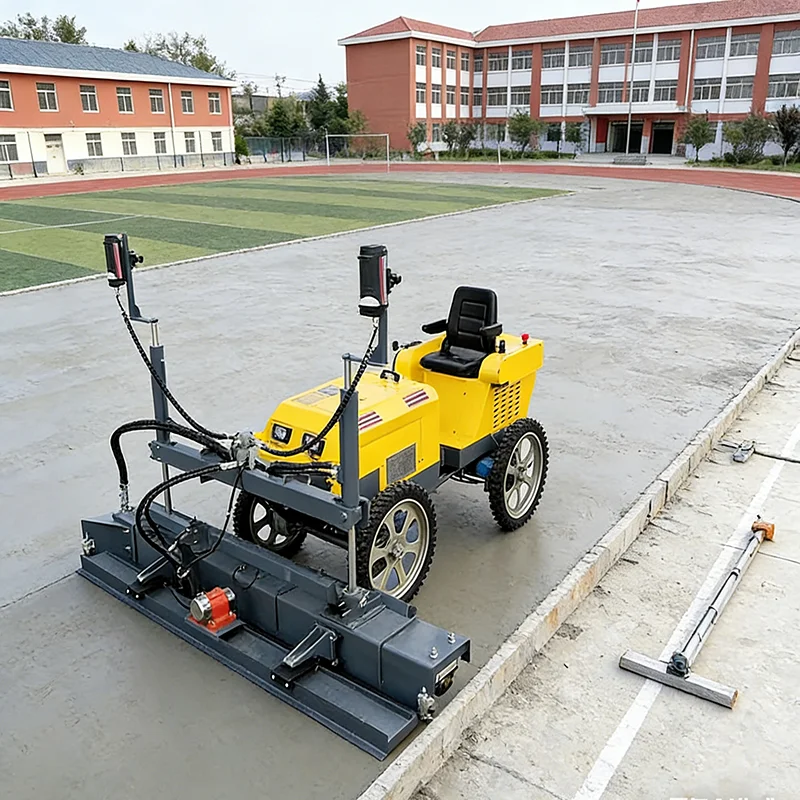
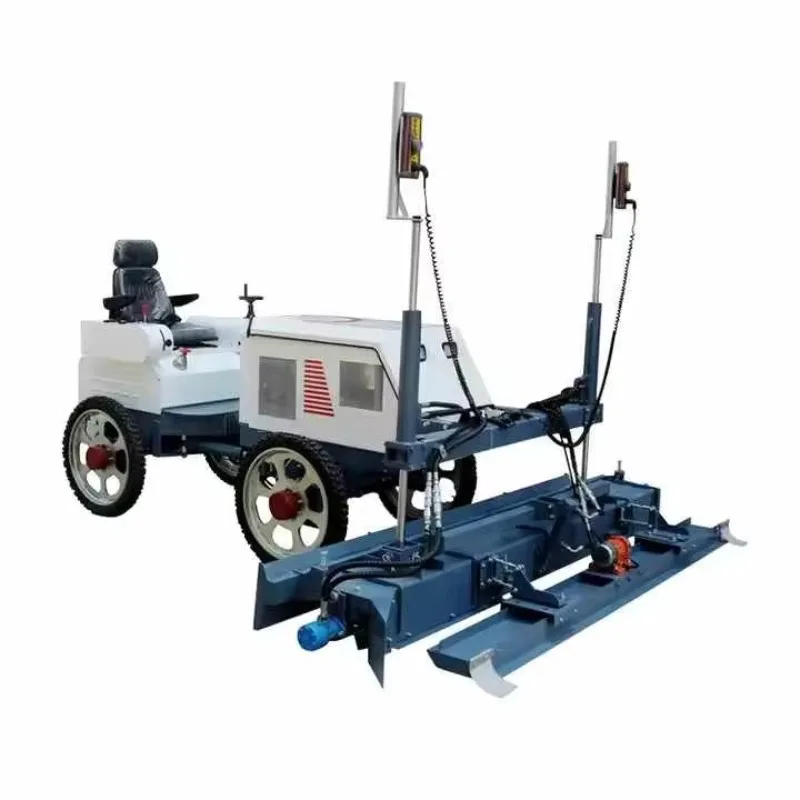
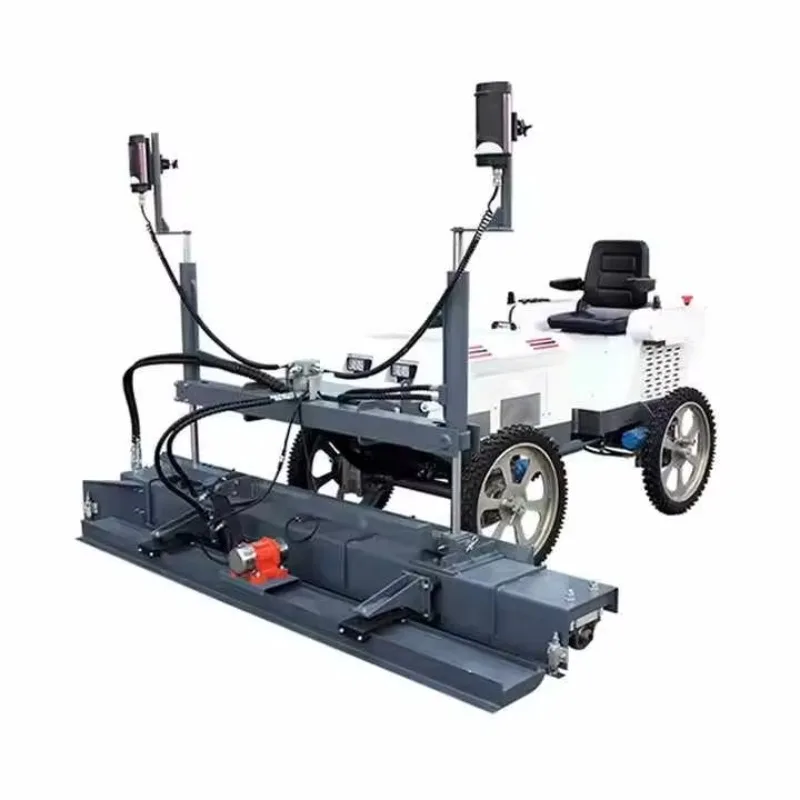
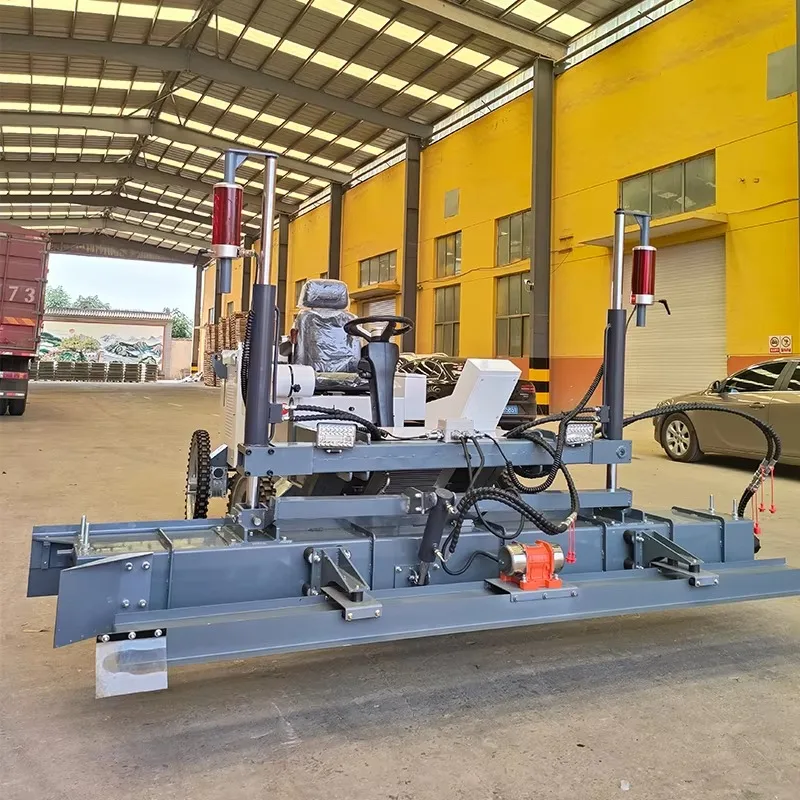



- Charge Status: Yes
- High-concerned chemical: none
- Condition: New
- Origin: Mainland China
- Certification: CE
- Place of Origin: Henan, China
- Application: construction site pavement
- Features: Easy operation
- Warranty: 1 Year
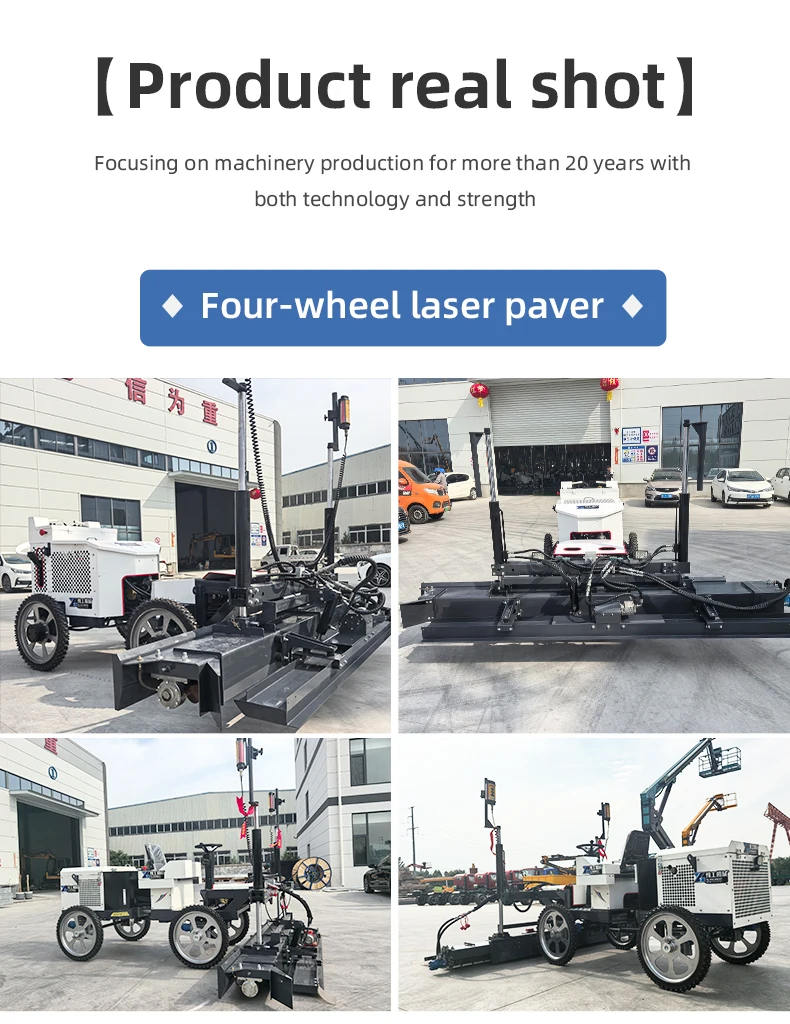
- Dimension(L*W*H): 3200*2700*1120
- Power(W): 2-44.1kw(2.68-59.14hp)
- Voltage: 380 V, 220 V
- Weight (KG): 400
- Video outgoing-inspection: Provided
- Machinery Test Report: Provided
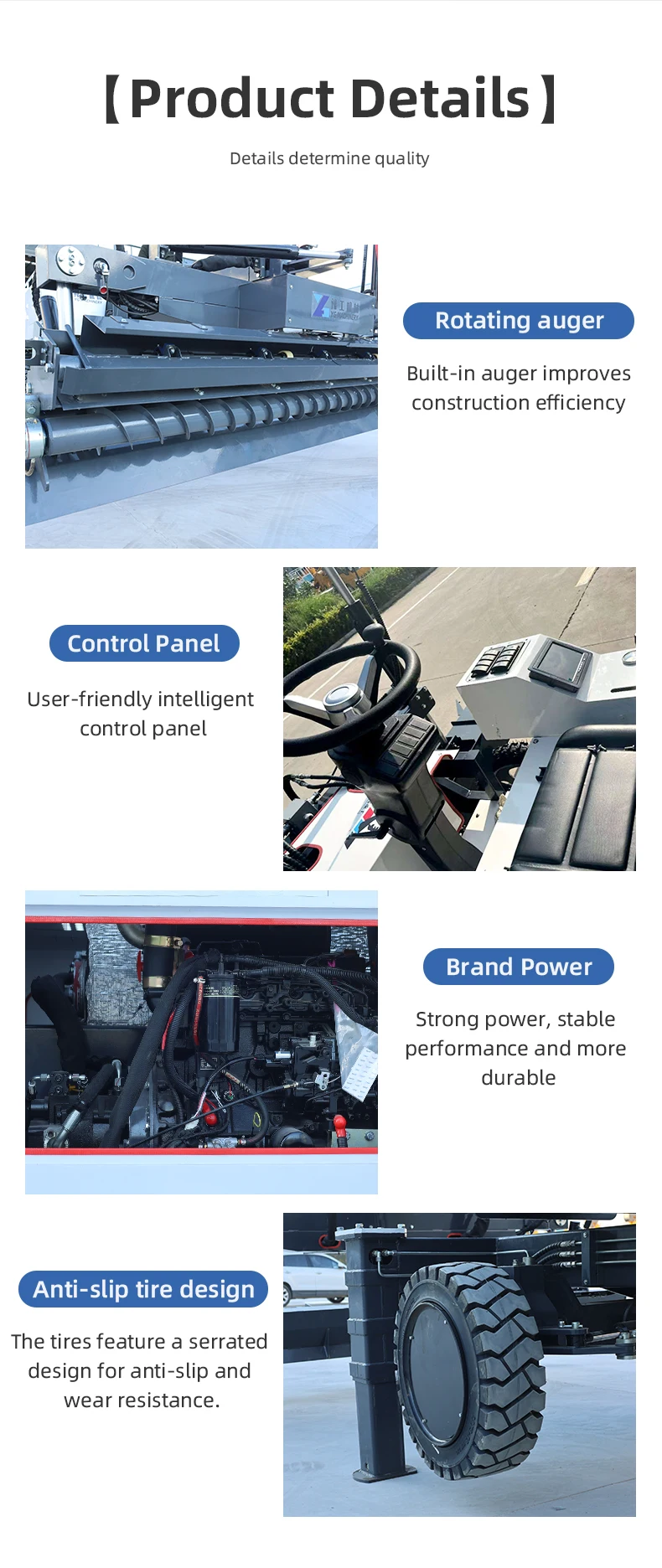
- Core Components: Engine, Bearing, Motor
- UNIQUE SELLING POINT: Long lifetime
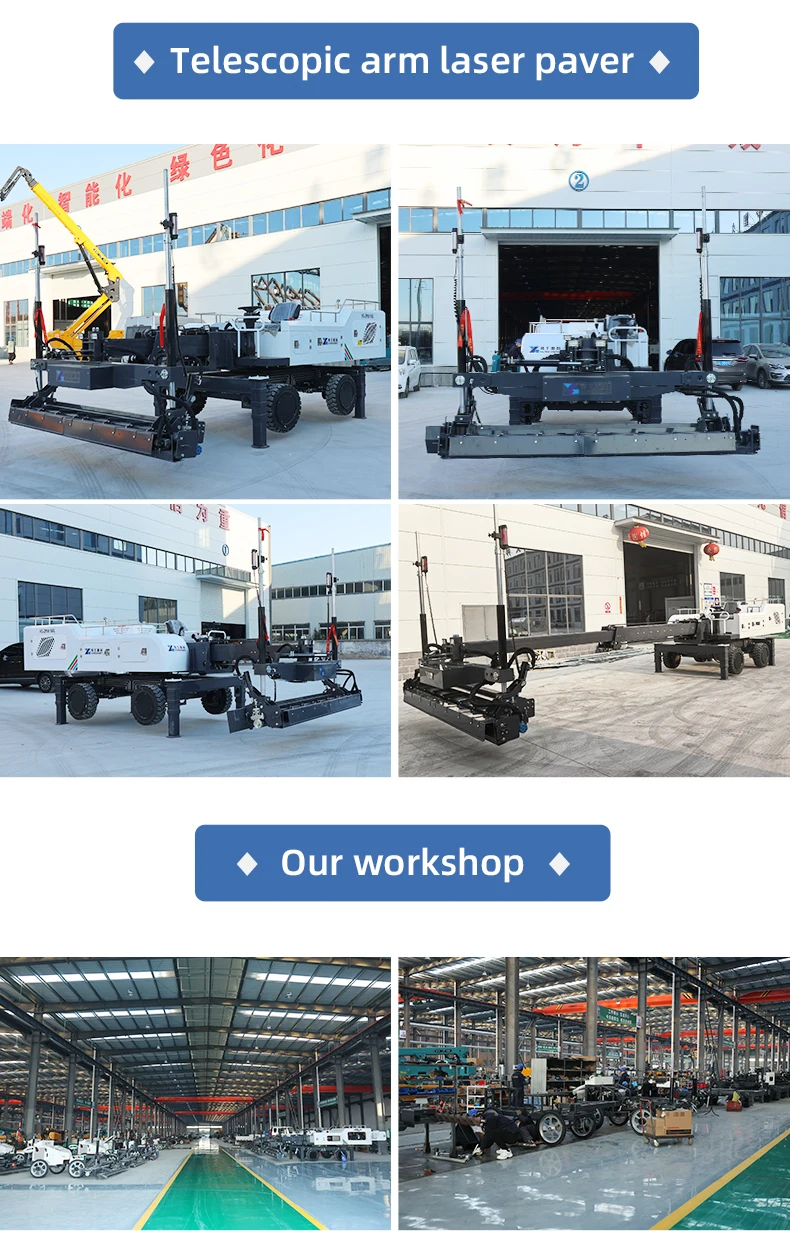
- Product name: Concrete Laser Leveling Screed Machine
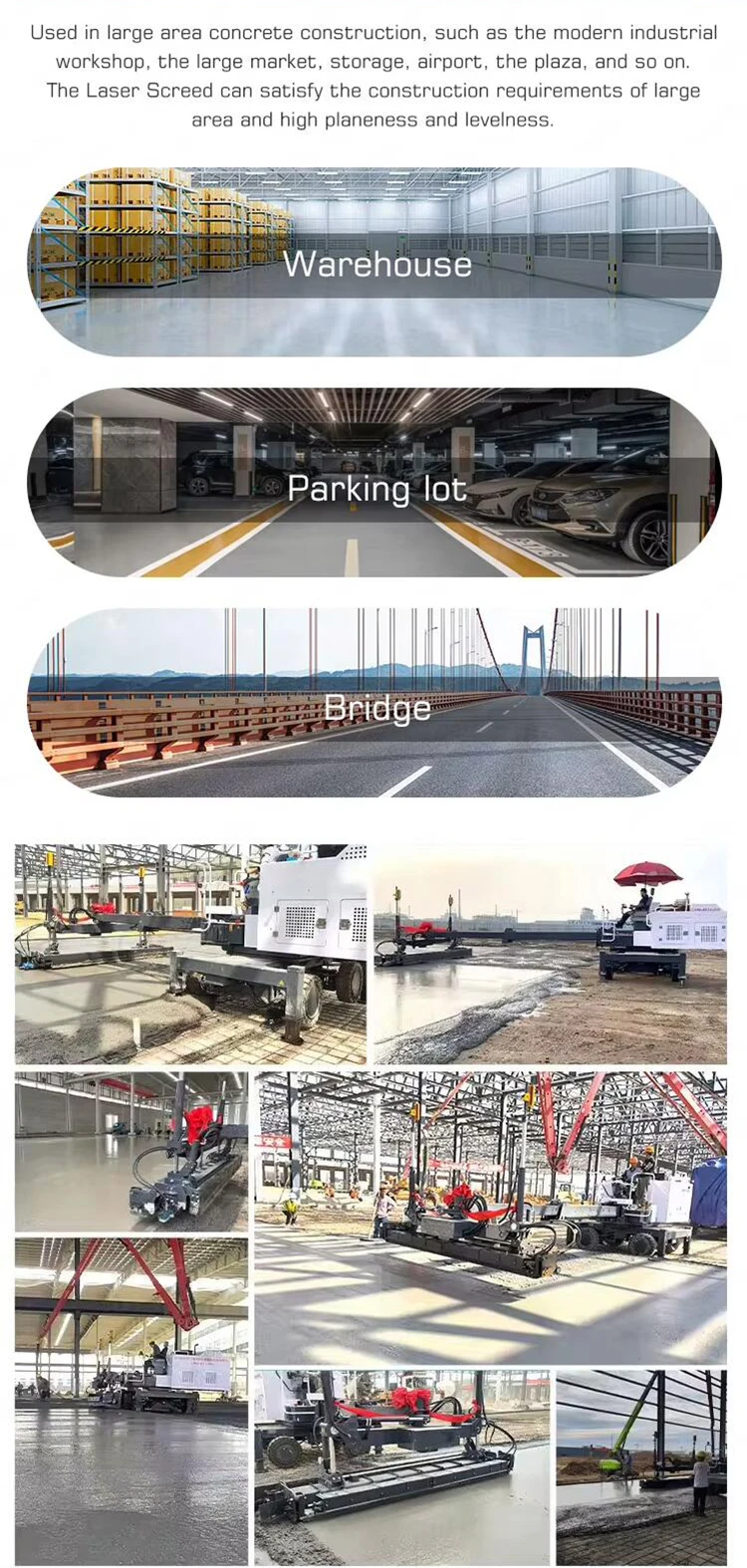
- Suitable for: Construction Site Road Leveling
- Start type: Electric/Manual
- Engine Model: Gasoline
- Screed Width: 2.5M-4m
- Screed Plate Level Control: Electric Automatic Control
- Vibration Frequency: 50hz
- Laser control system: American Danfoss laser control system
- Working speed: 4-20m/min
- Exciting force: 2000N

PLEASE NOTE:
1.All prices are for reference only. The final cost depends on your specific requirements and destination port. Feel free to contact us for detailed product information and official quotations.
2.We provide sea freight shipping service.
3.If you have any questions or interests about our products, please don't hesitate to reach out for a free quotation.
Eric (Sales Manager)
WhatsApp/Wechat/Mobile: +86 13783570301
Email: 3896873711@qq.com

Product Overview
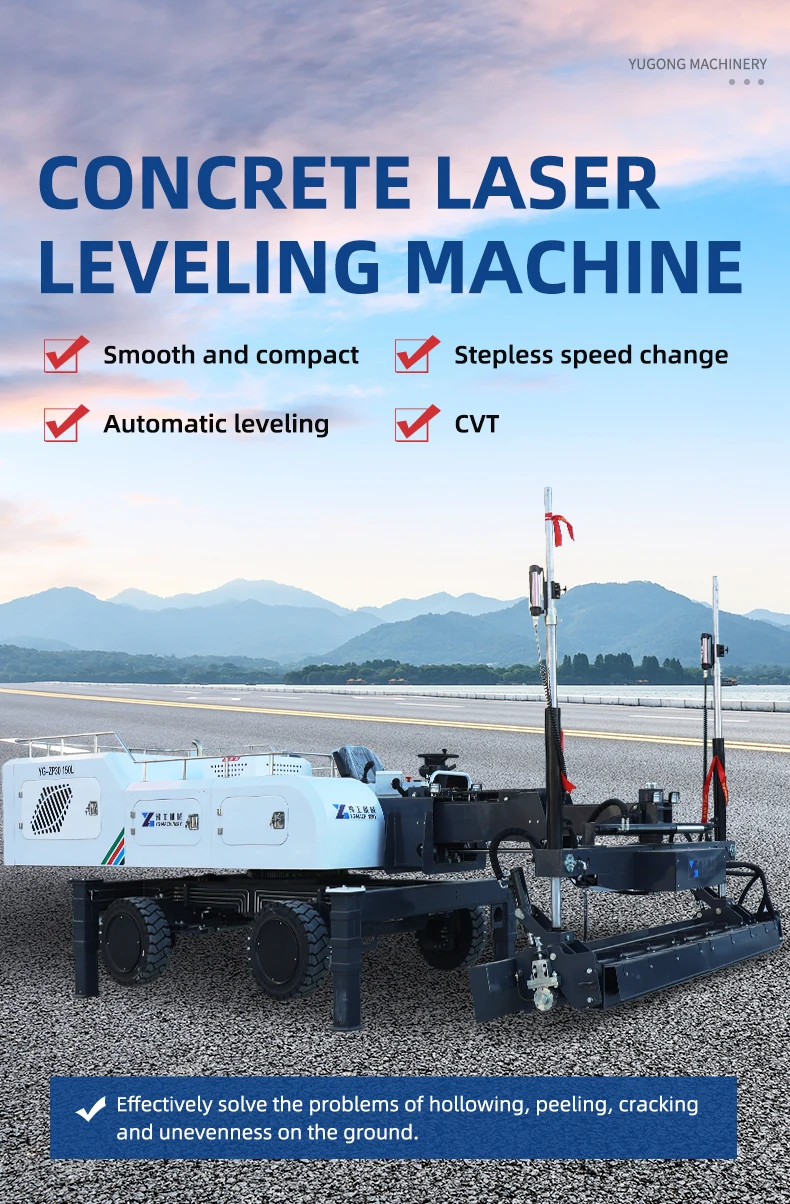
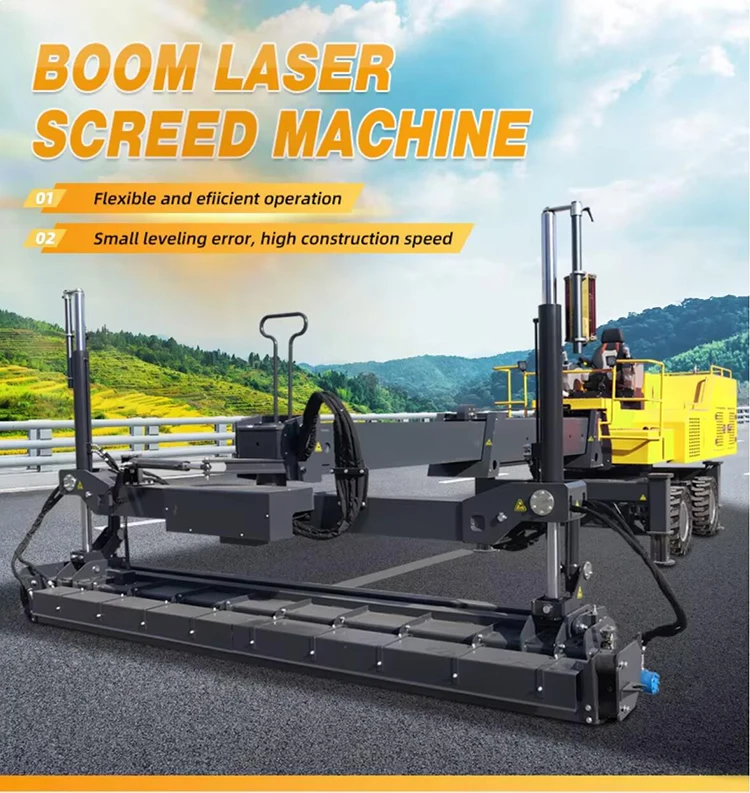
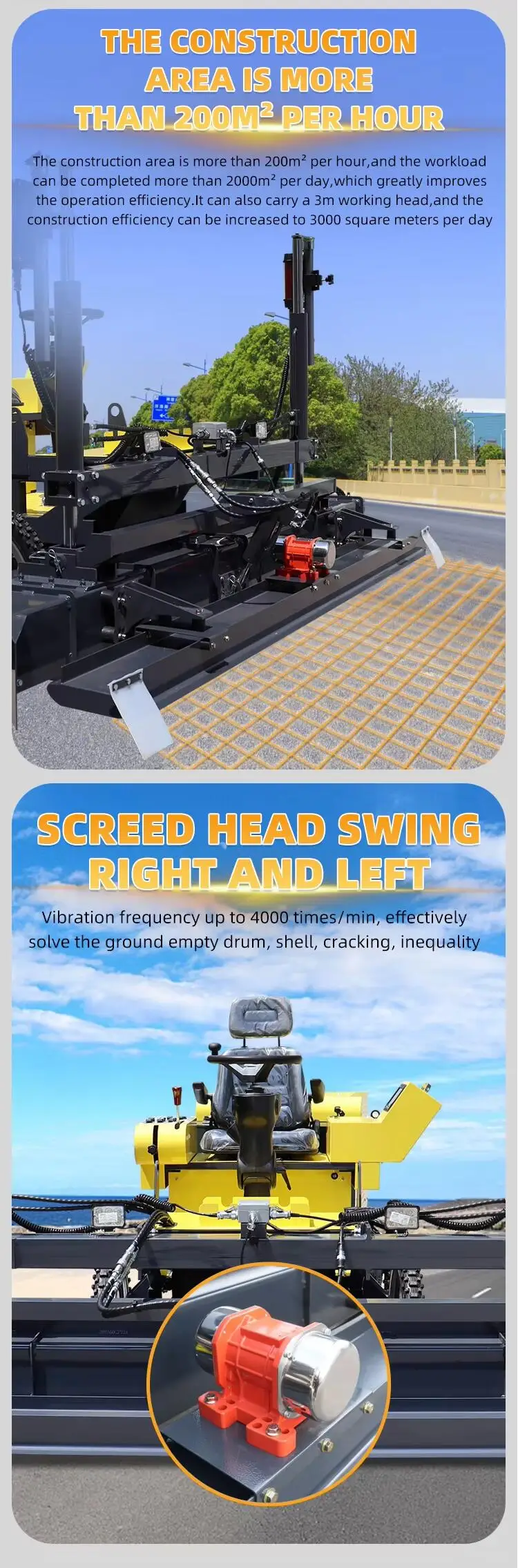
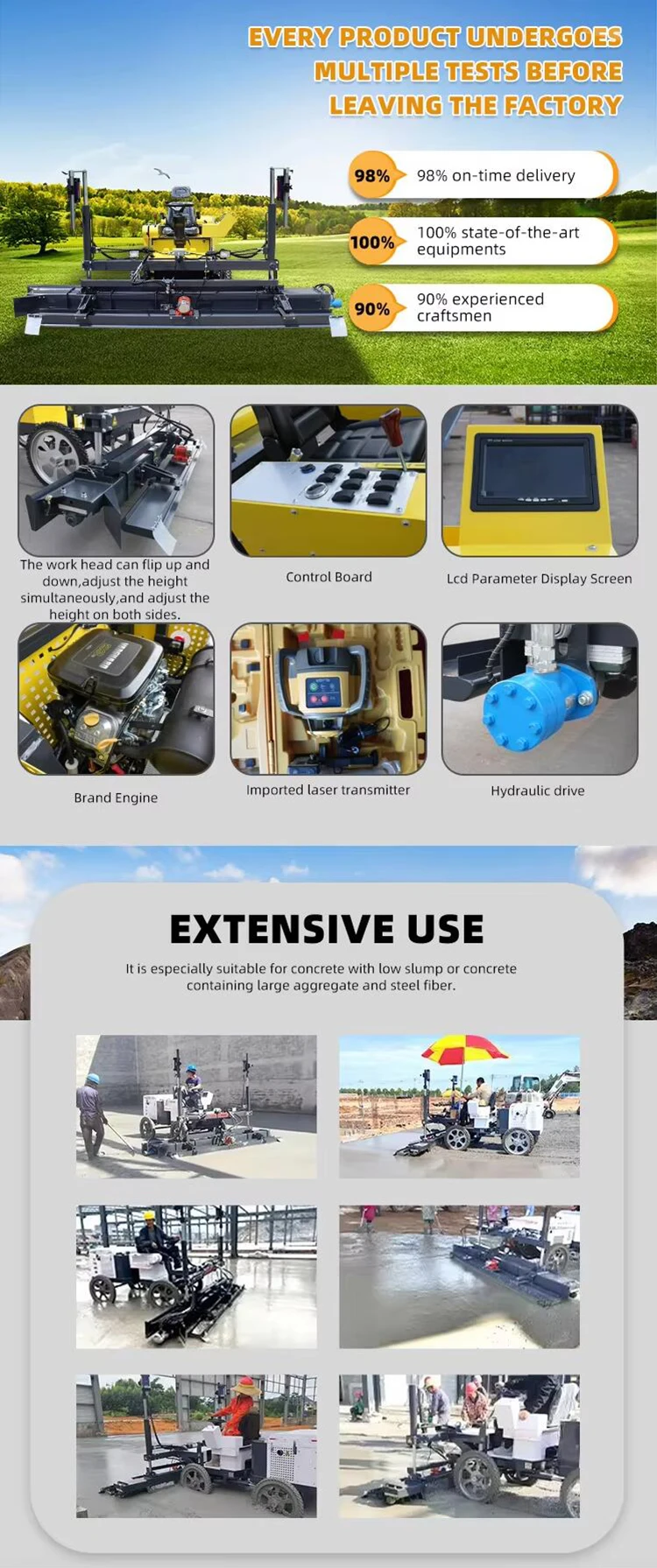
The concrete laser screed (also known as a laser paver or laser grader) is a new-generation, high-precision piece of equipment designed specifically for floor construction. Utilizing 360° laser reference positioning combined with microcomputer-controlled closed-loop hydraulic automatic leveling technology, it completes concrete paving, vibration, bleeding, leveling, and compaction in a single pass. It replaces traditional manual formwork and string-line leveling methods and is used for the construction of high-standard, large-area concrete floors, making it essential equipment for industrial flooring, warehousing and logistics, and large-scale factory facilities.
Key Applications
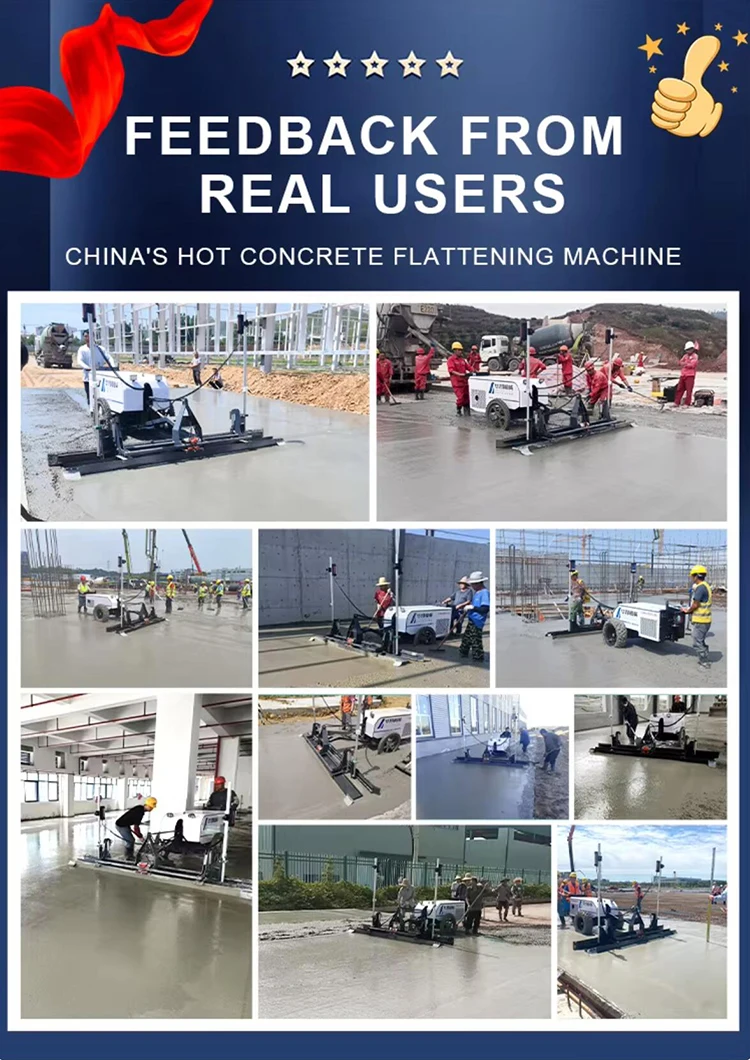
Laser screed machines can automatically perform leveling operations without manual intervention, saving on labor costs. They offer high precision—down to the millimeter level—and can meet the requirements of most engineering projects. With their high speed, they can complete large-area leveling tasks in a short time, improving work efficiency. Their excellent stability ensures reliable, long-term operation, thereby reducing maintenance costs.
Core Operating Principle
Establishing the Reference Plane: An independent laser transmitter mounted on a tripod emits a 360° rotating laser beam, creating a constant horizontal/slope reference plane across the entire area, eliminating cumulative errors from segmented sections;
Real-Time Data Acquisition: Laser receivers on both sides of the leveling head continuously capture laser signals, detecting height deviations between the head and the reference plane in real time;
Intelligent Processing: The onboard PLC controller rapidly analyzes deviation signals and automatically outputs height adjustment commands;
Hydraulic Execution: Hydraulic cylinders instantly adjust the height of the leveling head, maintaining millimeter-level elevation throughout the process while simultaneously performing material spreading, high-frequency vibration, and precision leveling operations.

**Q1: What thickness of concrete slabs are suitable for laser screed machines?**
A: Walk-behind models are generally suitable for concrete slabs with a thickness of 5–25 cm; ride-on laser screed machines can handle thicknesses of 5–35 cm. Use is not recommended for slabs that are too thin (<5 cm), as this can lead to sanding and disturbance of the subgrade; for slabs that are too thick, construction must be performed in layers.
**Q2: Can laser screeders be used for both indoor and outdoor floors?**
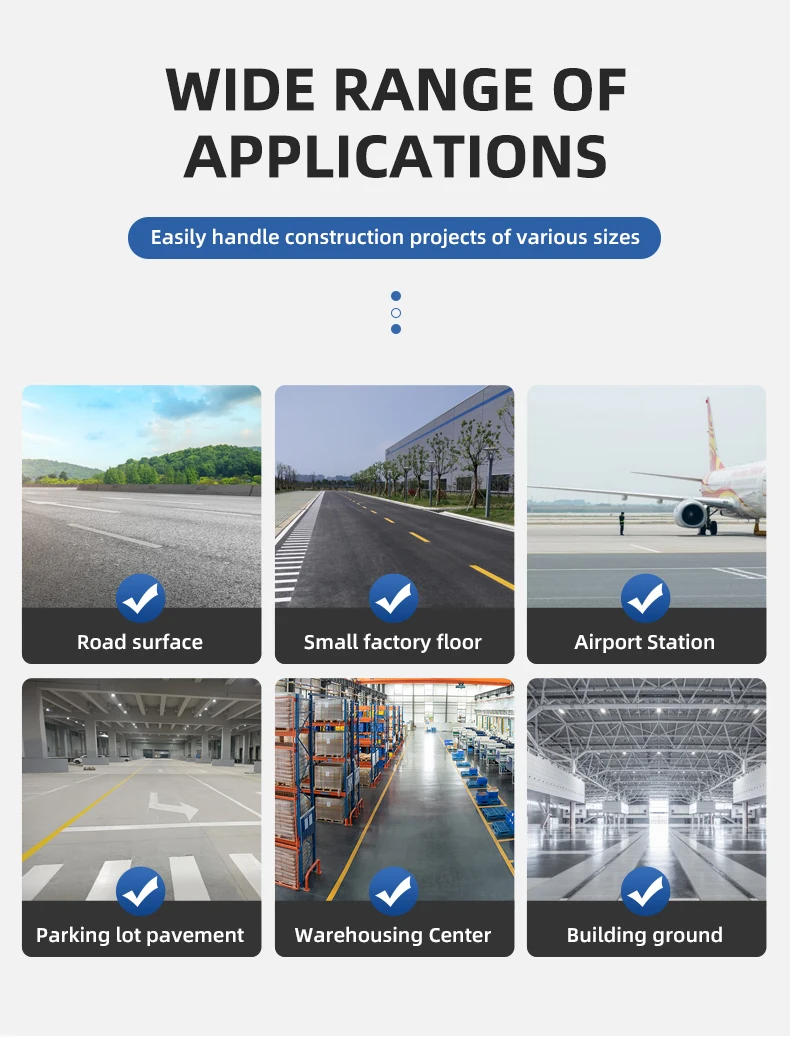
A: Yes, both. For indoor facilities such as factories, warehouses, and underground parking garages, ride-on models are preferred; for outdoor areas such as plazas and storage yards, care must be taken to avoid direct sunlight, which can interfere with the laser signal, and to properly protect the receiver.
**Q3: How do I choose between a walk-behind and a ride-on model?**
A: For small areas and confined spaces (such as between beams and columns in basements or in corners), choose a walk-behind model; **for large-area floors ≥1,000 m² where construction efficiency is a priority, choose a ride-on model**. Ride-on models are far more efficient than manual labor combined with walk-behind operation and are suitable for large sites such as factories and logistics parks.
**Q4: What conditions must the subgrade meet for construction?**
A: The subgrade must be compacted and level, free of large protrusions or deep pits; formwork elevation must be accurate; and space must be reserved around the perimeter for installing laser transmitter stations to ensure unobstructed laser reception.
**Q5: Why is the receiver signal unstable, with frequent laser loss and alarms?**
A:
1. Direct sunlight is shining on the receiver’s light-sensitive window, causing interference; install a light shield.
2. There are obstructions between the laser transmitter and receiver: rebar, scaffolding, workers, dust, or mist are blocking the laser beam.
3. The transmitter’s battery is low, causing the laser brightness to diminish.
4. The receiver is dirty; concrete mortar has caked onto the photosensitive panel. Clean it promptly.
5. The transmitter is not level.
**Q6: How should the laser transmitter be set up? What is the maximum distance from the machine?**
A: Set up the tripod on high ground outside the pouring area to avoid vibrations; the standard effective radius is **50–80 meters**. Accuracy decreases with distance; for large sites, a mobile station is recommended.
**Q7: Why is the finished floor level uneven with significant height variations?**
A:
1. The transmitter was not strictly leveled;
2. The tripod was bumped or shifted due to vibrations during construction;
3. The receiver is jammed, or the slider is stuck with cement;
4. The concrete slump fluctuated significantly.




Avaliações
Ainda não existem avaliações.